
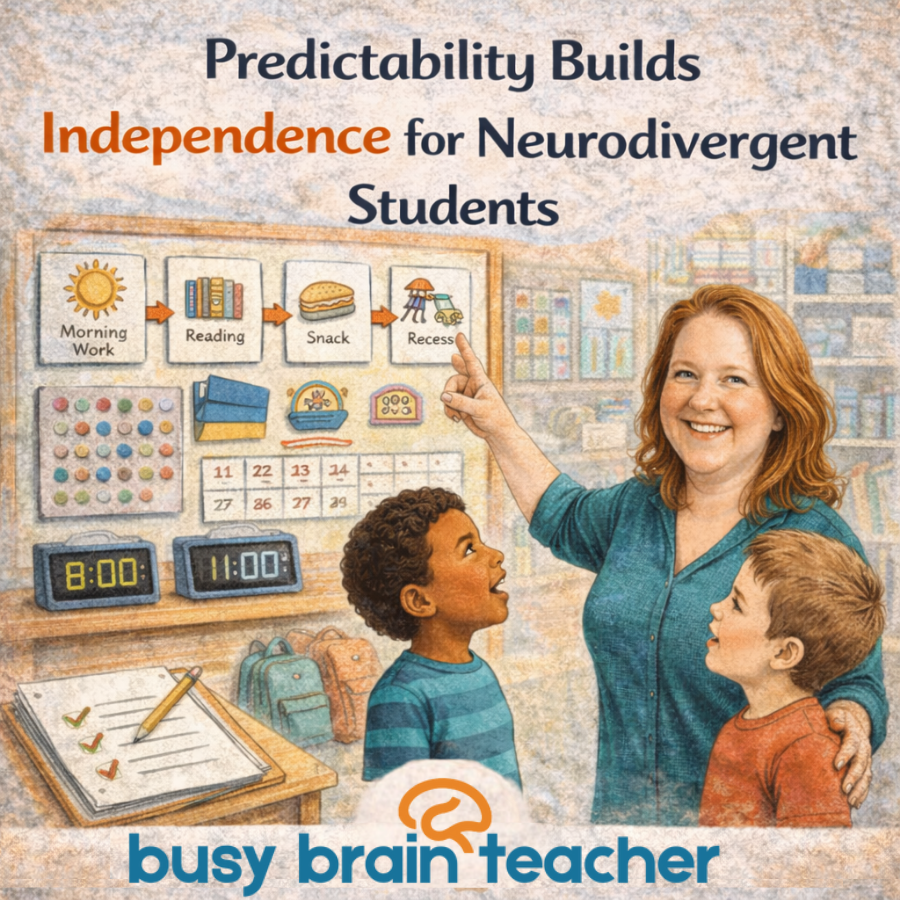
Independence is one of the biggest goals in special education. We want students to complete tasks on their own, advocate for themselves, manage their emotions, and move through their day with confidence. What many people do not realize is that independence does not start with removing support. Independence starts with predictability.
When students can predict what is coming next, they can focus their energy on learning, problem solving, and skill building. When the day feels unpredictable, much of their brain power goes toward trying to figure out what is happening around them. For many students with disabilities, predictability creates the foundation that independence grows from.
Why Predictability Matters
Many students with disabilities process transitions, sensory input, language, and expectations differently. Unexpected changes can create stress, anxiety, or shutdown responses. When students feel unsure about what is coming next, their brain often shifts into survival mode. In survival mode, learning, problem solving, and communication become much harder.
Predictability lowers that stress. When students know the order of events, what materials they need, how long something will last, and what is expected of them, they are more likely to attempt tasks and stay engaged. Predictability gives students the mental space to build independence skills instead of using all their energy to manage uncertainty.
Predictability Does Not Mean Rigidity
Sometimes predictability is misunderstood as making classrooms inflexible or overly structured. In reality, predictability is about clarity, not control. Students can handle change when change is explained, prepared for, and supported.
Predictable classrooms can still be creative, flexible, and responsive. The difference is that changes are communicated clearly and, when possible, previewed ahead of time. When students trust that adults will help them understand changes, they build resilience and flexibility over time.
How Predictability Builds Independence
When students know what to expect, they are more willing to try tasks without constant adult prompting. Predictable routines allow students to start work faster, transition more smoothly, and complete tasks with less anxiety. Over time, students begin to internalize routines and expectations.
Instead of asking what to do next, students begin to move through tasks automatically. Instead of relying on adult reminders, they begin to check visual schedules, task lists, or classroom systems on their own. This is how predictability turns into independence.
Predictability in Real Classrooms
Predictability shows up in small, everyday ways. Consistent arrival routines help students know how to start their day successfully. Visual schedules help students see what is coming next. Clear work expectations help students know when they are finished. Consistent transition language helps students prepare mentally for change.
Even simple systems, like keeping materials in the same location or using the same signal for attention, help students build confidence in navigating their environment independently.
Preparing Students for Change
Life is not always predictable, and students do need to learn flexibility. The key is teaching flexibility inside a predictable system. When students feel safe and confident in daily routines, they are more able to handle unexpected changes.
Previewing schedule changes, giving transition warnings, and explaining why changes are happening can help students stay regulated. Over time, students learn that change can happen without everything feeling out of control.
The Role of Visual Supports
Visual supports make predictability stronger. Many students process visual information more easily than verbal directions. Visual schedules, step-by-step checklists, task cards, and visual timers all help students understand expectations without relying only on working memory.
When students can see what to do and what comes next, they are more likely to attempt tasks independently and complete them successfully.
The Balance Between Support and Independence
A common concern in special education is providing too much support. In reality, predictable support often leads to faster independence. When supports are consistent and clear, students can begin to rely on systems instead of relying on adults.
The goal is not to remove support suddenly. The goal is to fade supports as students gain confidence and skill. Predictability helps students feel safe enough to take those steps toward independence.
For Parents: Predictability Helps at Home Too
Predictability is just as powerful at home. Consistent morning routines, homework routines, and bedtime routines help students know what is expected and reduce daily power struggles. When expectations stay consistent, students can focus on learning skills instead of reacting to change.
Simple visual schedules, checklists, or routine charts can help families build independence skills in natural ways throughout daily life.
Final Thoughts
Independence does not grow from removing structure. It grows from building safe, predictable systems that students can learn, trust, and eventually manage on their own.
When we create predictable environments, we are not limiting students. We are giving them the tools they need to succeed independently. Predictability lowers anxiety, builds confidence, and creates space for real learning to happen.
When students know what to expect, they are far more likely to believe they can handle what comes next.