
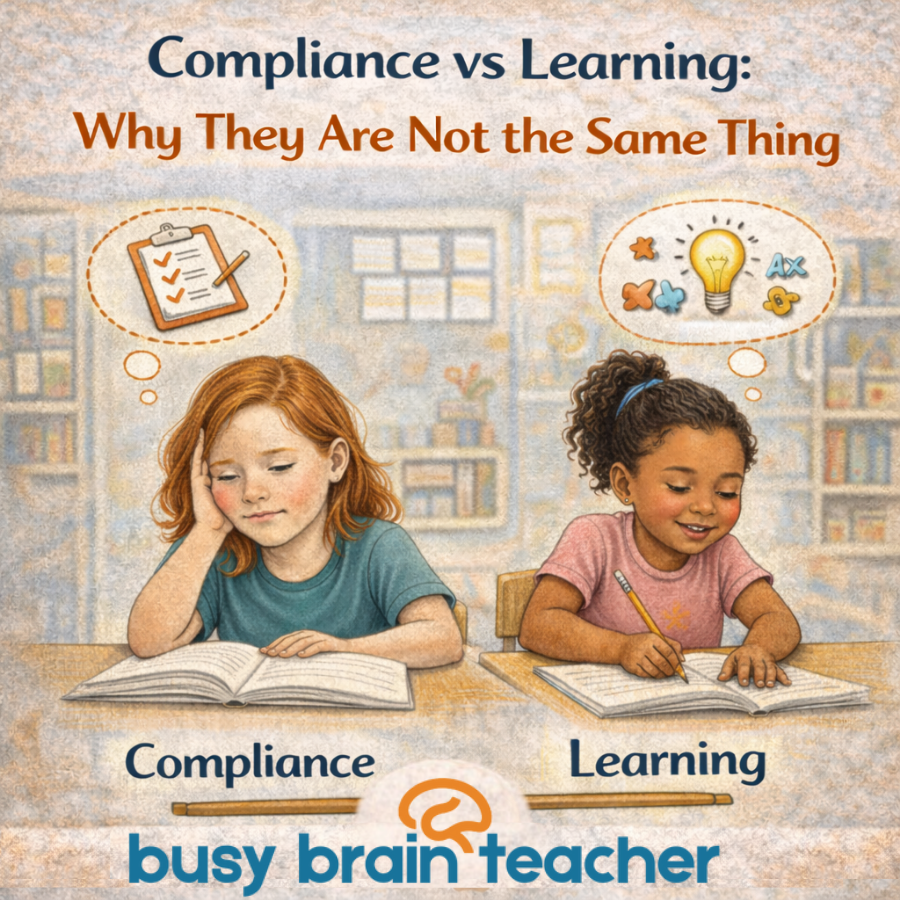
In education, it is easy to mistake compliance for learning. When students are quiet, sitting still, and following directions, it can look like everything is working. Classrooms often run smoother when students comply quickly and without resistance. The problem is that compliance does not always mean learning is happening.
Learning is active. Learning is messy. Learning requires thinking, questioning, trying, failing, and trying again. Compliance is about following directions. Learning is about building understanding. While both have a place in classrooms, they are not interchangeable.
What Compliance Looks Like
Compliance usually means students are doing what they are told, when they are told, and how they are told. In many situations, compliance is necessary. Safety procedures, classroom expectations, and certain routines depend on students following directions quickly and clearly.
However, compliance can sometimes hide gaps in understanding. A student may copy notes without understanding the content. A student may complete work by mimicking others. A student may follow steps without understanding why those steps matter. From the outside, everything looks successful, but real learning may not be happening.
What Real Learning Looks Like
Real learning often looks different. Students ask questions. Students make mistakes. Students need time to process. Students try strategies that do not work and then adjust. Learning often involves productive struggle, problem solving, and critical thinking.
For many students, especially neurodivergent students, learning may not always look quiet or perfectly organized. Some students need movement to think. Some need visuals to process language. Some need extra time before responding. These differences do not mean learning is not happening. Often, they mean learning is happening at a deeper level.
Why This Matters in Special Education
Students in special education are often praised for compliance because compliance is easier to measure. It is easier to see a student sitting quietly than it is to measure how deeply a student understands a concept. When we focus only on compliance, we can unintentionally lower expectations for real learning.
Students deserve access to thinking, problem solving, and meaningful academic work. They deserve opportunities to build independence, not just follow directions. When students are only taught to comply, they may struggle when they are asked to think independently or solve problems without step-by-step guidance.
The Risk of Overvaluing Compliance
When compliance becomes the main goal, students may become dependent on adult direction. They may wait to be told what to do instead of making decisions. They may fear making mistakes. They may avoid taking risks because they worry about being wrong.
Over time, this can limit independence, confidence, and long-term success. Students may learn how to follow directions, but not how to think through challenges on their own.
The Role Compliance Still Plays
Compliance is not bad. It is necessary in many situations. Students need to follow safety rules, respect boundaries, and participate in shared classroom expectations. The goal is not to remove compliance from classrooms. The goal is to make sure compliance is not mistaken for understanding.
Balanced classrooms teach students when to follow directions quickly and when to think, question, and explore.
How to Support Real Learning
Supporting real learning often means allowing time for thinking and processing. It means encouraging questions and treating mistakes as part of learning. It means using visuals, models, and multi-sensory instruction so students can access content in different ways.
It also means giving students opportunities to make choices, solve problems, and explain their thinking. When students can explain why something works, learning is usually happening at a deeper level.
What This Looks Like Day to Day
In real classrooms, this might mean asking students to explain their thinking instead of only checking if an answer is correct. It might mean allowing extra processing time instead of rushing responses. It might mean offering multiple ways to show understanding instead of requiring one specific format.
It may also mean accepting that learning can look different from student to student. Some students will show learning through discussion. Others will show learning through building, drawing, or demonstrating.
For Parents: Why This Matters at Home Too
At home, it can be easy to focus on whether homework is finished. While completing work matters, understanding matters more. Asking students to explain what they learned or how they solved a problem helps build stronger long-term skills.
Encouraging effort, problem solving, and persistence helps students build confidence and independence over time.
Final Thoughts
Compliance can make classrooms look calm and organized, but calm does not always mean learning is happening. Real learning involves thinking, processing, struggling, and growing.
Students need structure, expectations, and accountability. They also need opportunities to think independently, make mistakes, and build real understanding. When we balance compliance with meaningful learning, we prepare students not just to follow directions, but to navigate real-world challenges with confidence.
The goal is not just well-behaved students. The goal is capable, confident learners who understand how to think, solve problems, and advocate for themselves.