
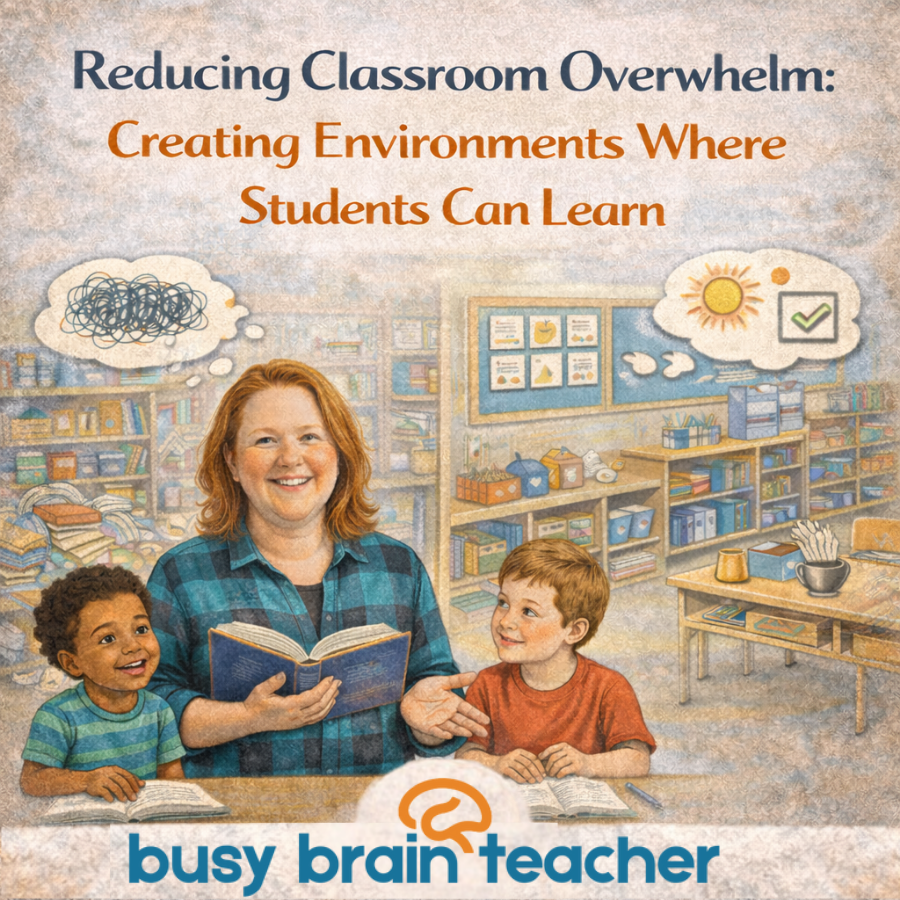
Overwhelm is one of the biggest hidden barriers to learning. Many students want to succeed, want to participate, and want to do well, but their brain and body are working so hard to manage stress, noise, movement, and expectations that there is little energy left for learning.
For many neurodivergent students, overwhelm is not about behavior or motivation. It is about capacity. When the environment feels too loud, too fast, too unpredictable, or too demanding, the brain shifts into survival mode. When that happens, learning, problem solving, and communication become much harder.
Reducing overwhelm does not mean lowering expectations. It means removing barriers so students can meet expectations successfully.
What Classroom Overwhelm Looks Like
Overwhelm does not always look the same from student to student. Some students become loud, restless, or disruptive. Some students shut down, put their head down, or stop responding. Some students avoid work or leave the area. Others may appear compliant but are mentally checked out.
These responses are often nervous system responses, not choices. When the brain feels unsafe or overloaded, it focuses on survival first and learning second.
Why Overwhelm Happens in Classrooms
Classrooms are busy places. There is noise, movement, transitions, social expectations, academic expectations, and time pressure. Many students can manage these demands, but others need more structure, clarity, and sensory support.
Unclear directions, fast transitions, visual clutter, constant noise, and unpredictable schedule changes can all increase overwhelm. When multiple stressors happen at once, students may reach their limit quickly.
Reducing Overwhelm Without Lowering Expectations
Supporting students does not mean removing challenge. It means making expectations clear, predictable, and accessible.
Students are more likely to attempt difficult work when they understand what is expected, how long it will take, and what success looks like. When the environment feels safe and predictable, students are more willing to take academic risks.
The Power of Predictable Routines
Predictable routines reduce decision fatigue and anxiety. When students know how to start their day, how to transition, how to begin work, and how to ask for help, they spend less energy figuring out what to do next.
Over time, routines build confidence and independence. Students begin to move through expectations automatically because the routine becomes familiar and safe.
Managing Sensory Input
Sensory input plays a huge role in overwhelm. Bright lights, loud noise, crowded spaces, and constant movement can be overwhelming for some students.
Small adjustments can make a big difference. Soft lighting, quiet corners, headphones, flexible seating, and reduced visual clutter can help students stay regulated and focused.
Making Directions Clear and Accessible
When directions are long, fast, or only verbal, many students struggle to keep up. Breaking directions into steps, using visuals, modeling expectations, and checking for understanding can reduce stress and confusion.
When students understand what to do, they are much more likely to engage in learning.
Supporting Transitions
Transitions are one of the most common overwhelm triggers. Sudden changes can cause stress, especially when students feel unprepared.
Transition warnings, visual timers, previewing the next activity, and consistent transition language can help students shift between tasks more smoothly.
Teaching Regulation Skills
Students are not born knowing how to regulate stress. Regulation is a learned skill that takes time, practice, and adult support.
Teaching students how to ask for breaks, use calming strategies, or communicate overwhelm gives them tools to stay engaged in learning.
What This Looks Like Day to Day
In real classrooms, reducing overwhelm often means slowing down directions, previewing changes, building strong routines, and creating spaces where students can reset when needed.
It also means recognizing early signs of overwhelm and supporting students before behaviors escalate. Prevention is often more effective than reaction.
For Parents: Reducing Overwhelm at Home
Overwhelm happens at home too. Busy schedules, sudden changes, and unclear expectations can increase stress for many children.
Predictable routines, clear expectations, and calm responses help children feel safe and supported. When children feel safe, they are more able to learn and practice new skills.
Final Thoughts
Reducing classroom overwhelm is not about making school easier. It is about making learning possible.
When students feel safe, predictable, and supported, they can focus on thinking, problem solving, and building independence. When we reduce overwhelm, we are not lowering expectations. We are creating environments where students can actually reach them.
When students feel regulated and supported, learning has space to happen.