
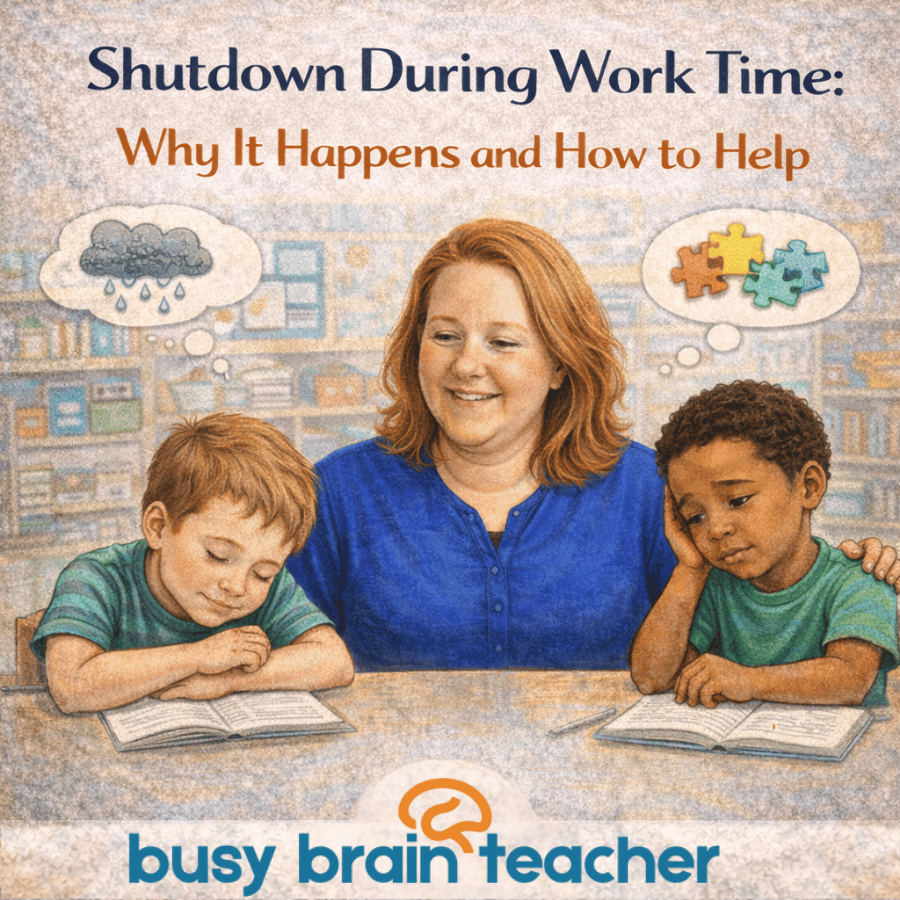
One of the most confusing things for adults to see is when a child shuts down during work time. Shutdown usually does not look loud or disruptive. It often looks quiet. A child might put their head down, stare at their paper, avoid eye contact, or stop responding. Because it is quiet, shutdown is sometimes mistaken for laziness, refusal, or not caring.
Most of the time, shutdown is actually a stress response. When a child feels overwhelmed, their brain can move into what is sometimes called a freeze response. In this state, the child is not choosing to stop working. Their brain is trying to protect them from stress they do not know how to manage yet.
Understanding shutdown helps adults respond in ways that help children feel safe enough to try again.
What Shutdown Can Look Like
Shutdown can look different for every child. Some children become very quiet and stop participating. Some avoid eye contact or stop answering questions. Some stare at their work without starting. Others slowly disengage by putting their head down, asking to leave the room, or saying they are tired.
Some children may still look like they are following directions, but they are mentally checked out. This is one reason shutdown can be easy to miss.
Why Children Shutdown
Shutdown usually happens when something feels too hard, too fast, too confusing, or too stressful. This can happen because of schoolwork, noise, social stress, or fear of making mistakes.
For many neurodivergent children, work time includes several stressors at once. There might be noise, time pressure, unclear directions, and fear of getting the wrong answer. When too many stressors happen at once, the brain may freeze instead of reacting loudly.
Shutdown is not laziness. It is often a signal that the child does not feel safe or capable in that moment.
Shutdown Is Different From Refusal
Refusal usually looks active. A child might argue, push work away, or say no. Shutdown usually looks passive. A child may look stuck, frozen, or disconnected.
When adults understand this difference, they can respond in ways that lower stress instead of increasing it.
What Makes Shutdown More Likely
Very large assignments, fast pacing, surprise changes, or being corrected in front of others can increase shutdown. Sensory overload, like loud noise or crowded spaces, can also play a role.
Past experiences matter too. If a child has struggled or felt embarrassed during schoolwork before, they may shutdown faster when work feels hard.
How to Help in the Moment
When a child is shutting down, the first goal is helping them feel calm and safe, not forcing work right away. Using a calm voice, fewer words, and offering small next steps can help.
Sometimes this means offering a short break, helping them start the first step, or temporarily making the task smaller. The goal is to help the child move from stress mode back into learning mode.
How to Prevent Shutdown Over Time
Breaking work into smaller steps helps children see success faster. Clear examples help children understand what to do. Predictable routines help children feel safe. Visual supports help children remember steps without feeling overwhelmed.
Teaching children how to ask for help, ask for a break, or say when something feels too hard gives them tools to use before shutdown happens.
Building Safe Learning Environments
Children are more likely to try when they know mistakes are safe. When adults focus on effort and growth instead of perfection, children are more willing to take learning risks.
Correcting privately instead of in front of others can also help protect confidence.
What This Looks Like in Real Life
Often, adults can watch for early signs like slowing down, avoiding work, or asking to leave more often. Supporting early can prevent full shutdown.
It is also important to celebrate small progress. Starting one problem, asking for help, or trying again after frustration are all signs of growth.
For Families: Shutdown Happens at Home Too
Shutdown during homework is very common. Many children use most of their energy managing school. By the time they get home, they are exhausted.
Breaking homework into small chunks, allowing short breaks, and lowering pressure can help children re-engage. The goal is to build confidence over time, not force perfection in one moment.
Final Thoughts
Shutdown during work time is not about character or motivation. It is usually a stress response. When adults respond with calm support, clear structure, and skill building, children are more likely to regain confidence.
Children want to succeed. When we reduce overwhelm, build predictability, and teach communication skills, we give them tools to stay engaged and keep growing.