
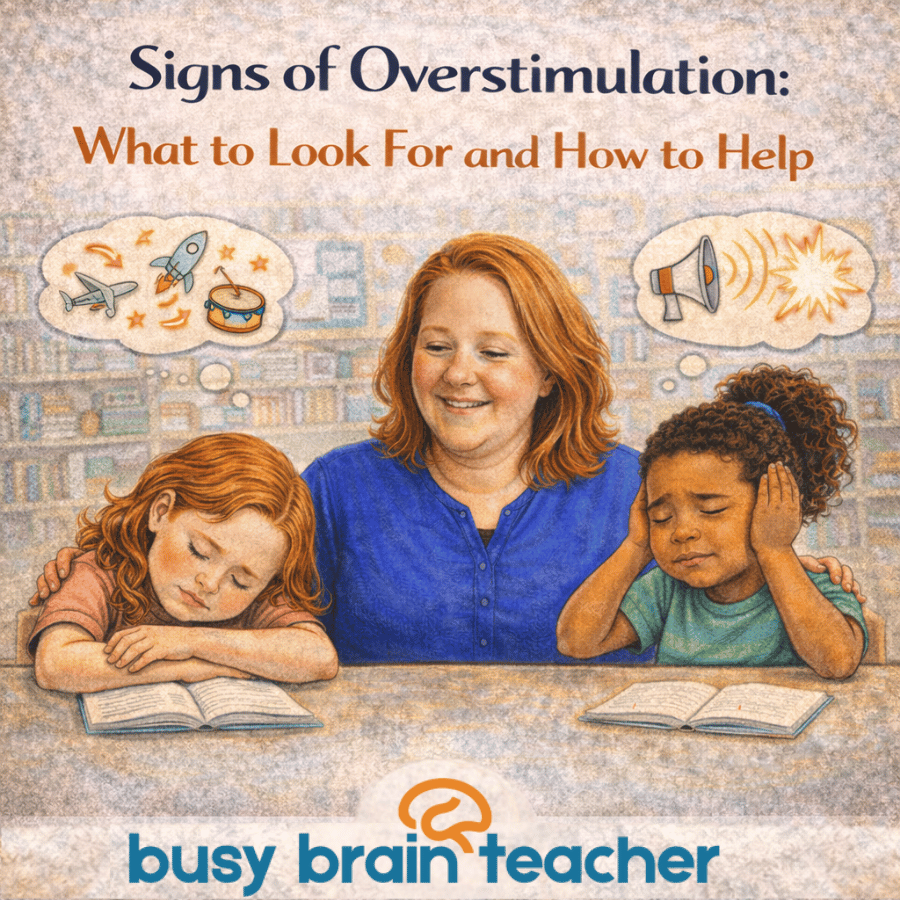
Many adults notice moments when a child suddenly seems overwhelmed, upset, or completely shut down. This can be confusing in classrooms, homes, and public spaces, especially when it seems to happen quickly. What many people do not realize is that these moments are often caused by overstimulation, not behavior problems.
Overstimulation happens when a child’s brain is taking in more information than it can handle at one time. This can include noise, lights, movement, emotions, school stress, social pressure, or busy public environments. When this happens, the brain focuses on trying to feel safe instead of focusing on learning, listening, or completing tasks.
Learning to recognize early signs of overstimulation helps adults step in before things turn into a meltdown or shutdown, whether that is at school, at home, or out in the community.
What Overstimulation Really Means
Overstimulation is not about a child being dramatic or difficult. It is about the brain and nervous system working too hard. Some children feel overwhelmed by loud sounds. Others feel overwhelmed by busy environments, fast schedules, or social pressure.
Many neurodivergent children experience this more often because their brains process information differently. When too many things happen at once, the brain can feel overloaded very quickly. This can happen in a busy classroom, a crowded store, a loud restaurant, or even during a busy family day at home.
Early Signs Adults Might Notice
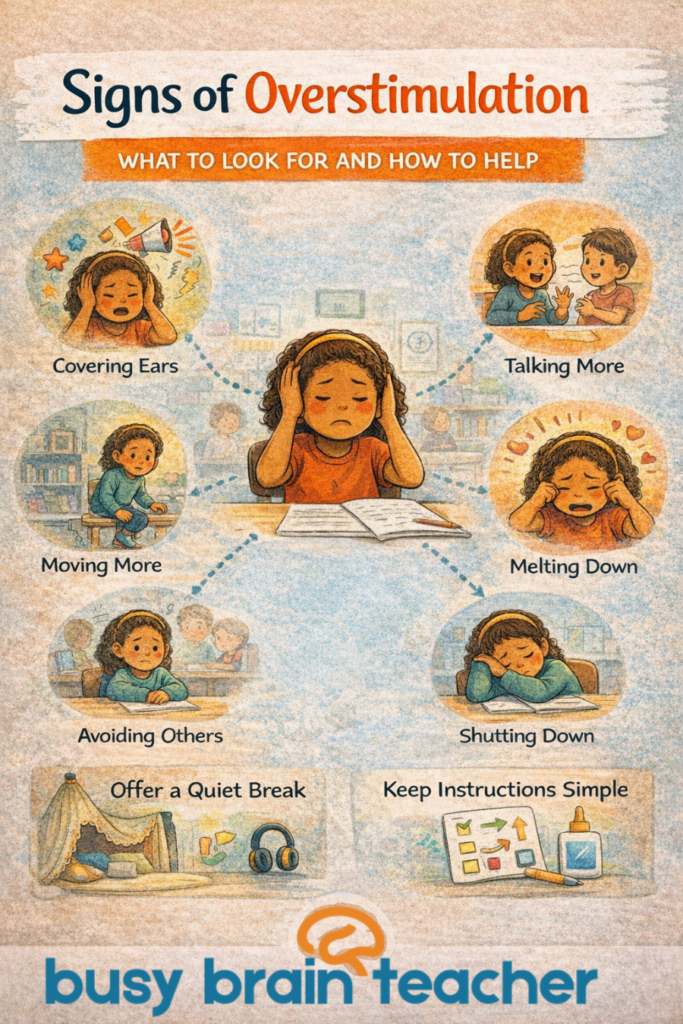
Early signs are often small and easy to miss. A child might start moving more, talking more, or getting distracted more easily. Some children cover their ears, avoid eye contact, or become more sensitive to touch or sound.
Adults might also notice emotional signs like frustration, anxiety, or quick mood changes. Some children rush through work or make more mistakes because their brain is trying to keep up with too much input.
In public spaces, early signs might include clinging closer to a trusted adult, asking to leave, becoming unusually quiet, or suddenly becoming more active or emotional.
Catching these early signs is one of the best ways to help children stay regulated.
Signs That Overstimulation Is Getting Worse
If overstimulation continues, behaviors usually become more noticeable. Some children become louder, more emotional, or more restless. Others may cry more easily or become very rigid in their thinking.
Some children do the opposite and shut down. They may stop talking, stop working, or withdraw from others. This can happen during class, during homework, or while out in the community.
Both escalation and shutdown can come from the same feeling of overwhelm.
Common Triggers for Overstimulation
Loud environments, crowded spaces, bright lights, and strong smells can all cause stress. Fast transitions, confusing directions, social pressure, and academic frustration can also add to overwhelm.
Public environments often combine many triggers at once. Stores, sporting events, family gatherings, airports, and restaurants can all be exciting but also overwhelming.
Sometimes it is not one big thing. Sometimes it is many small stressors building up over time. A busy school day, followed by an after-school activity, followed by a crowded store can quickly push a child past their comfort level.
How to Help in the Moment
When a child is overstimulated, the goal is to lower stress and help them feel safe. Speaking in a calm voice and using fewer words can help. Offering a quiet space or short break can give the brain time to reset.
In public spaces, this might mean stepping outside, moving to a quieter area, or taking a short sensory break. At school, it might mean using a calm corner or quiet workspace. At home, it might mean offering quiet time or lowering demands temporarily.
It can also help to lower expectations for a short time. Helping a child start with one small step instead of the whole task can make work feel possible again.
How to Help Prevent Overstimulation
Predictable routines help children feel prepared. Clear directions reduce confusion. Visual supports help children remember steps without feeling overwhelmed.
Planning ahead is especially helpful for public outings. Talking about where you are going, what it might be like, and what the plan is if the child feels overwhelmed can reduce stress. Sensory supports like headphones, movement breaks, comfort items, or quiet spaces can help children stay regulated longer.
Teaching children how to ask for breaks or communicate overwhelm gives them tools they can use before they reach their limit.
What This Looks Like Day to Day
At school, this might mean offering a break before behavior escalates, adjusting lighting or noise when possible, or previewing schedule changes. At home, this might mean offering quiet time after school or building calm routines after busy days.
In public spaces, it might mean planning shorter outings, building in breaks, or choosing quieter times to visit busy places.
Supporting early signs often prevents bigger stress responses later.
Making a Plan With Your Child Before Overwhelm Happens
One of the biggest changes for our family came when we stopped only reacting to overwhelm and started planning for it ahead of time. Making a plan with my son before stressful situations happened was a complete game changer for us.
Before we had a plan, outings and busy environments felt unpredictable. If he became overwhelmed, both of us were trying to figure out what to do in the moment while emotions were already high. Once we started talking through situations ahead of time, everything changed. He knew what his options were, and I knew what supports he needed most.
We started creating simple plans when he was calm and regulated. We talked about what overwhelm felt like in his body and what early signs I might see. Then we talked about what would help him reset. Sometimes that meant stepping outside. Sometimes it meant headphones. Sometimes it meant taking a break in the car. Sometimes it meant leaving early, and we made it clear that leaving early was not failure. It was problem solving.
The biggest difference was giving him a voice in the plan. When he helped decide what would help, he was much more likely to use those supports. He also became more willing to try new places because he knew there was a plan if things got too hard.
This approach works in classrooms, at home, and in public spaces. Before going somewhere busy, we would talk about what it might be like and what the plan would be if he started to feel overwhelmed. Knowing there was a safe exit plan helped lower his anxiety before we even arrived.
What surprised me most was that once he knew there was a plan, he often did not need to use it as quickly. When children know they have a safe way out, their brain is not stuck in “What if I can’t handle this?” mode. Instead, they can focus on the experience in front of them.
For us, planning ahead did not just help manage overwhelm. It built confidence, trust, and independence. It helped my son learn that needing support is not failure. It is learning how to take care of yourself in a world that can sometimes feel too loud, too fast, or too unpredictable.
Final Thoughts
Overstimulation is not about children choosing to misbehave. It is about the brain trying to handle too much input at once.
When adults learn to spot early signs and respond with calm support, children are more likely to stay regulated and engaged. Helping children understand their own signals and needs builds confidence and independence over time.
When we reduce overwhelm and support regulation in classrooms, homes, and public spaces, we create space for learning, growth, and success.